Meme coin trading versus holding blue chips and which approach fits most portfolios
Want articles like this for your own video to promote it on YouTube and Google? Order them through the Telegram bot @sat_sit_bot. It writes articles around your video, embeds the video and publishes them on popular niche websites (no ads). Your first 50 articles are free.
· based on the channel Ethan Prosper
Key takeaways
- A meme coin is a token whose price is driven by attention and community, not by cash flow or product revenue.
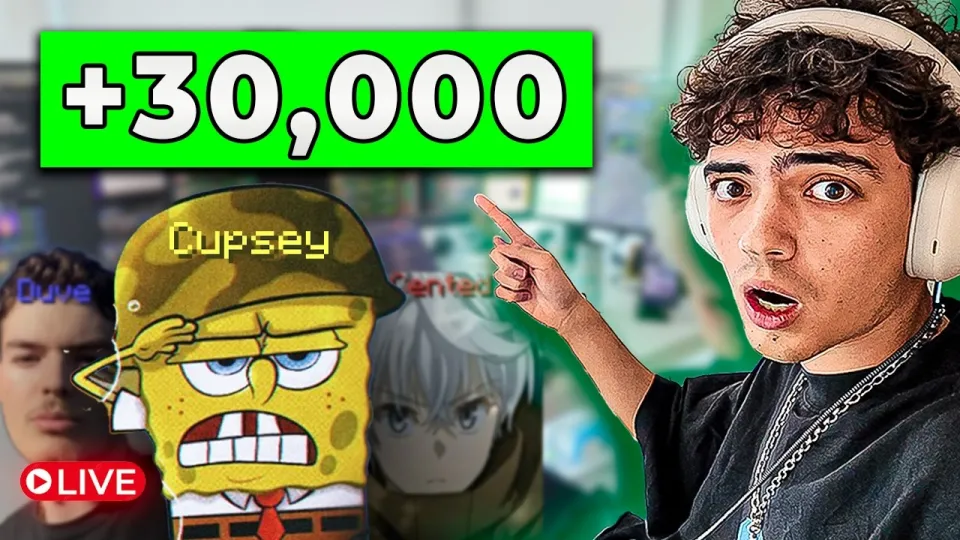
- In Ethan Prosper's session with Cupsey, early trades on Lobo and a 1% token produced about +200 SOL, and a Grok-themed trade added roughly $15K.
- Two more positions, Mosaic AI and a dev-linked "magic internet money" token, added about +80 SOL combined.
- Top meme traders work 10+ hour days scanning new Solana pairs on terminals like Axiom and Padre, which is the hardest style of trading.
- Copy trading a wallet like Cupsey's (2fg5QD1eD7rzNNCsvnhmXFm5hqNgwTTG8p7kQ6f3rx6f) is possible but lags entries and inherits every loss.
A meme coin is a cryptocurrency whose value rests on attention, community and narrative rather than revenue or a working product, so trading it is a speed and risk-management game rather than an investing one. For most people the better choice is to treat meme coins as a small, high-risk satellite position and keep the core of a portfolio in larger, more liquid assets. The exception is a narrow group of full-time Solana traders who scan new pairs all day, as shown in Ethan Prosper's session with Cupsey, the trader presented in the video as the world's number one meme coin trader.
If you want to follow that style with the same tooling, registration on the terminal used in the video is here: trade on Padre.
What a meme coin actually is and why its price moves
A meme coin has no cash flow, so its price is a pure function of new money arriving and existing holders refusing to sell. That makes the market a queue: early buyers profit only if later buyers pay more, and the token's chart is a record of who arrived first. Liquidity is usually thin, so a single large sell can wipe out most of the gains, and on launchpads such as Pump.fun a token can go from a few thousand dollars of liquidity to six figures and back within minutes.
This is also why the same coin can look like a generational opportunity on one timeframe and a rug on another. There is no earnings report to anchor a valuation, so the only durable edges are speed, information and position sizing.
How the top trader in the video actually operates
The session with Cupsey is a live demonstration of a full-time meme coin workflow rather than a tutorial in fundamentals. The pair ran a series of Solana trades on a terminal, and the description lists both wallets: Ethan's at sAdNbe1cKNMDqDsa4npB3TfL62T14uAo2MsUQfLvzLT and Cupsey's at 2fg5QD1eD7rzNNCsvnhmXFm5hqNgwTTG8p7kQ6f3rx6f.
The results in the chapter list are concrete: early trades on Lobo and a token called 1% produced roughly +200 SOL, a Grok-themed bot coin added about +$15K, and a dev-linked "magic internet money" play plus Mosaic AI together contributed around +80 SOL. The pattern behind those numbers is consistent with how professional meme traders work:
- Screen new pairs continuously on a terminal instead of browsing charts of established coins.
- Check the dev's history and wallet behaviour before entering, since a dev who has already dumped previous tokens is a warning.
- Size entries so that a total loss on any single coin is survivable.
- Take partial profits into strength rather than waiting for a round number.
- Exit on liquidity deterioration, not on hope.
Why this style is the hardest version of crypto trading
Speed trading new Solana pairs is the most demanding style in the market, and the people who do it treat it as a job. The realistic routine is ten or more hours a day in front of a terminal, hundreds of tabs, and constant rejection of candidates that look almost good enough. Reaction time matters more than analysis: by the time a coin is discussed publicly, the move that made it interesting has usually already happened.
That does not make the approach wrong, it makes it narrow. It rewards people with fast execution, cheap fees, spare capital and the temperament to lose repeatedly without changing size. It punishes anyone who treats a single good session as a repeatable salary.
Meme coin trading compared with holding larger coins
Holding larger assets and trading meme coins solve different problems. A position in a liquid major coin gives exposure to the broader market cycle with deep order books, no launchpad risk and no need to monitor a chart every minute. A meme coin position offers asymmetric upside from a small stake but with a high probability of going to zero.
The practical comparison looks like this:
- Time required: majors need occasional review; meme trading needs daily screen time.
- Risk of total loss: low for majors, high for any individual meme coin.
- Liquidity: deep for majors, often a few thousand dollars for a new pair.
- Skill edge: macro and patience for majors; execution, wallet analysis and discipline for memes.
- Typical outcome for beginners: slow compounding versus rapid drawdowns.
A workable middle path is to keep the majority of capital in larger coins and allocate a fixed, small slice to meme trades, refilling that slice only from realised profits.
Copy trading wallets and other shortcuts that rarely work
Copy trading a strong wallet sounds like the obvious answer, but execution lag breaks it. A copier enters seconds after the original buyer, which on a fast launch can mean a price several times higher, and exits after the original seller, which can mean holding a token with no bids left. The original trader's average entry is also unknown, so the copier inherits the worst part of the distribution.
Watching a public wallet is more useful for study than for mirroring: it shows which pairs a skilled trader skips, how quickly positions are cut, and how size changes with conviction. Treat those wallets as a syllabus, not a signal service.
Questions traders keep asking about meme coins
Most recurring doubts come down to capital requirements, terminology and whether the visible wins are real. The honest answers are less exciting than the highlight reels.
- How much capital is needed? A few SOL is enough to place trades, but not enough to absorb the variance of this style; the traders in the video operate at a size where a single loss is still meaningful.
- What does "faucet" mean here? It refers to a source of small amounts of tokens or test funds, not a guaranteed income stream.
- Are the profits real? Realised gains on a screen are real only after withdrawal; unrealised positions on thin liquidity are not.
- Should everyone trade this way? No. The same session that produced hundreds of SOL also shows how quickly a position can turn, and the traders doing it are professionals with years of screen time.
Useful links from the session
- Terminal used for the trades: https://trade.padre.gg/rk/prosper
- Ethan Prosper's links: https://ethanprosper.com
- Cupsey on X: https://x.com/cupseyy
- Free Discord, SOLMAFIA: https://discord.gg/solmafia
- Paid community, Pastel: https://www.joinpastel.com/r/ref=ETHAN
The verdict on meme coin trading
Meme coins are a legitimate but brutal corner of crypto, and the session published by Ethan Prosper on 20 August 2026 shows both the ceiling and the cost of playing it well: roughly +200 SOL on two early trades, about +$15K on a Grok-themed coin, and around +80 SOL more from two later positions, all inside a day of continuous screen work. The transferable lesson is not the profit figure but the process, which is screening, wallet checks, small size and fast exits. For almost everyone, the better choice is to hold larger coins for the core of a portfolio and treat meme coins as a capped, deliberate gamble. If you want to test the workflow with the terminal from the video, start here: register on Padre.
Source: I Traded With The World’s #1 Memecoin Trader · Markdown version
Questions & answers
Is meme coin trading more profitable than simply holding Bitcoin or Solana?
For the small number of full-time traders with fast execution and strict sizing, meme coin trading can produce outsized returns in a single session, as the +200 SOL and +$15K trades in the video show. For most people the expected outcome is negative, because thin liquidity and launchpad risk mean a high chance of total loss on each position. Holding larger coins gives up upside but removes execution risk.
How much money do I need to start trading meme coins?
A few SOL is enough to place trades on Solana launchpad tokens, but that amount is too small to survive the variance of the style. Practically, you need enough capital that losing the entire amount allocated to a single coin does not affect your finances or force you to change size after a loss.
Can I just copy trade a top trader's wallet instead of learning the process?
Copy trading lags the original by seconds, which on a fast launch can mean entering at a much higher price and exiting after the seller has already moved the book. You also inherit the trader's losses without knowing their average entry. Watching a public wallet is more valuable as study material than as a signal to mirror.
What does the word faucet mean in meme coin trading?
A faucet is a source of small amounts of tokens or test funds, often used to let new users try a chain or platform without buying anything. It is not a reliable income stream, and free tokens from a faucet should be treated as practice capital rather than profit.